Mission
The Laboratory of Pomology is dedicated to teaching and research in Pomology, focusing on fruit trees and fruit-bearing shrubs of the temperate, subtropical, and tropical zones. Its aim is to understand the physiological and biochemical mechanisms underlying growth, fruiting, and fruit quality, as well as to optimize cultivation practices for producing high-quality, value-added products.
Emphasis is placed on the adaptation of tree crops to changing climatic conditions and the challenges of climate change, the sustainable management of orchards, the assurance of the quality of produced goods, as well as the strengthening of the competitiveness of Greek fruits and nuts in international markets.
The Laboratory belongs to the Division of Pomology and Viticulture of the Department of Crop Science (School of Plant Sciences), Agricultural University of Athens. Its Director is Professor Ioannis E. Papadakis.
History
The history of the Laboratory of Pomology is intertwined with the founding of the Agricultural University of Athens itself. Law 1844/1920 (Government Gazette A΄ 17/22.01.1920) established the Highest Agricultural School of Athens (H.A.S.A.), under the Ministry of Agriculture. The courses set out in the founding law already included “General and Special Pomology and Horticulture”, and the law provided for scientific laboratories for the students’ practical training, directed by the responsible professor.
The same law provided for the School to be established on the estate of the Pomological and Horticultural Station of Attica, with the transfer of its buildings, land and facilities. The School was established in Votanikos, on the former Hasekis estate, where agricultural, pomological and horticultural stations had operated since the 19th century. Pomology thus lies at the foundations of today’s University, both in its curriculum and in its very grounds.
By Decree of 20 September 1944, the regular Chair of “Pomology and Horticulture” was established at the Highest Agricultural School of Athens. In 1976, Presidential Decree 769/1976 (Government Gazette A΄ 278/22.10.1976) renamed it the Chair of “Pomology”, placed the Laboratory of Pomology under it and defined its subject matter: General Pomology (botanical characteristics and organography, biology and applied ecology, propagation and improvement of fruit trees, orchard practice from orchard establishment to harvest) and Special Pomology of deciduous fruit trees (pome fruits, stone fruits, nuts, etc.), evergreen fruit trees and fruit-bearing shrubs.
Today the Laboratory continues this tradition, combining teaching in seven Departments of the University with modern experimental research in the field and in the laboratory.
Timeline
- 1920Founding of the Highest Agricultural School of Athens (H.A.S.A.) (Law 1844/1920). Its courses include “General and Special Pomology and Horticulture”.
- 1944Establishment of the regular Chair of “Pomology and Horticulture” (Decree of 20.9.1944).
- 1976Renamed Chair of “Pomology”; the Laboratory of Pomology is placed under it and its subject matter is defined (P.D. 769/1976).
- 1989Founding of the Department of Crop Science (P.D. 377/1989).
Facilities
The Laboratory’s teaching and research activities take place in three areas of the University:
- Main Building, 1st floor: offices of faculty members and laboratory teaching staff, the “E. Vathi” Teaching Room, and research laboratory spaces for sample preparation, measurements and analyses.
- Pomology Building: laboratory classrooms A, B and C, for theoretical and practical training.
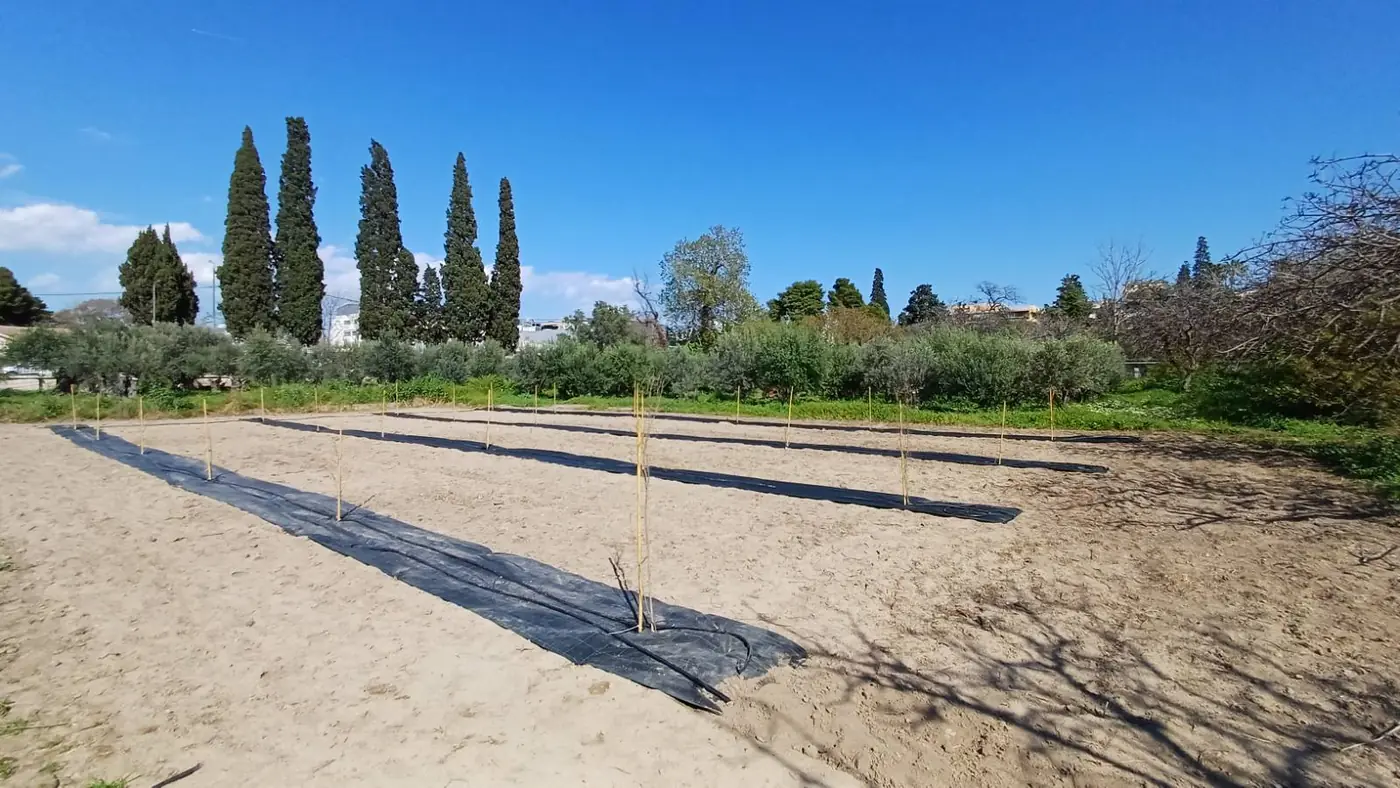
- Pomology Orchard: a 3.5-hectare educational orchard, where field practicals take place.
Research infrastructure and scientific equipment
The Laboratory of Pomology has research laboratory spaces and infrastructure that support research in plant physiology and nutrition, abiotic stress, fruit quality, and postharvest biology and technology.
Its infrastructure includes a plant growth chamber, a tissue culture chamber, controlled atmosphere chambers, cold rooms, an ultra-low temperature freezer, three greenhouses and an experimental orchard (the Pomology Orchard) of approximately 3.5 hectares.
Selected scientific equipment
- Instrumental and laboratory analysis: a gas chromatograph with a flame ionization detector (GC–FID), two high-performance liquid chromatography (HPLC) systems with UV-DAD and refractive index (RI) detectors, spectrophotometers, a flame photometer and an atomic absorption spectrophotometer.
- Plant physiology and fruit characteristics: a LI-COR 6400XT portable system for studying the photosynthetic function of plants, a colorimeter, a digital firmness tester, a digital refractometer, an automatic titrator, pH meters and digital calipers.
- Supporting laboratory equipment: a refrigerated centrifuge and other centrifuges, precision balances, dry-ashing furnaces and microwave ovens, drying ovens and freezers.
The equipment is used in the Laboratory’s teaching and research activities and in collaborative research projects.